
Wisdom in Everyday Life: The Lesson of Vimalakīrti
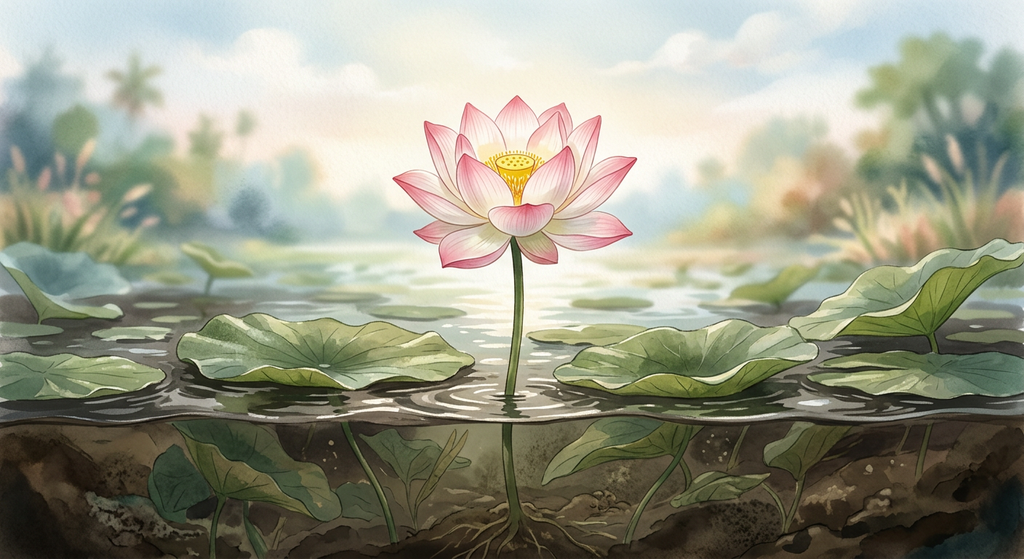
Introduction: Mud and Lotus Flowers
The Vimalakīrti Sūtra is one of the most beloved and profound texts of Mahayana Buddhism, written around the beginning of the Common Era (approximately 100 CE). Although its protagonist, Vimalakīrti, is a wealthy lay practitioner—not a monk—the stories and dialogues in the text are filled with humor, paradoxes, and magical elements. Yet, its message carries a timeless truth: true spiritual growth is not about escaping the world but transforming oneself within it.
Imagine a lotus flower growing in murky water, yet remaining pure and untarnished. In the same way, our hearts can remain pure amidst the busyness of everyday life. It is not our environment that defines us, but how we engage with it.
This lesson is universal. Whether you have a busy family, a challenging job, or are simply seeking meaning in life, the true test of wisdom lies in how we live, not in how we retreat.
1. Life Is Your Temple
We often associate spiritual growth with special places or moments: a meditation room, a retreat, or a quiet morning. But the Vimalakīrti Sūtra challenges us: What if the real work begins when you step out the door?
- Your home is a temple.
- Your work is a temple.
- Your relationships are a temple.
- Your challenges are a temple.
It’s not about where you are, but how you are. Are you patient when your child cries? Do you stay calm when a colleague irritates you? Can you listen without judgment? That is the true practice.
2. Not the Form, but the Heart
It’s easy to fall into the trap of outward appearances. We might think:
- "I meditate every day, so I am spiritual."
- "I do volunteer work, so I am a good person."
- "I read many books on wisdom, so I am enlightened."
But true growth is not in the actions themselves, but in the intention and transformation behind them.
- Meditation without inner peace is just an exercise in sitting.
- Good deeds with a hidden agenda are just transactions.
- Knowledge without application is just information.
Ask yourself:
- Have I become more patient?
- Can I let go of what doesn’t serve me?
- Do I respond with understanding instead of judgment?
3. The Pitfall of the spiritual ego
One of the most subtle obstacles on the path is the spiritual ego: the idea that you are "better" because you "know more" or have "practiced longer." You may let go of worldly fame, only to become attached to the pride of your own "enlightenment."
- "I’ve been practicing for years, so I know better."
- "I do so much for others, so I deserve respect."
- "I am so spiritual, so you should listen to me."
But true wisdom is without "I". It is:
- Serving without expectations.
- Giving without keeping score.
- Leading without controlling.
4. Growth Through Connection
We sometimes think that spiritual growth is a solitary journey. But the Vimalakīrti Sūtra teaches us that true growth happens in relationship with others.
- Conflicts are opportunities to practice patience.
- Critics are teachers in disguise.
- Difficulties are invitations to become more creative.
It’s not about avoiding problems, but about learning to grow through them. A wise person is not someone without challenges, but someone who uses every challenge to become stronger and more compassionate.
5. The Art of Letting Go
One of the deepest lessons is that true freedom does not come from having more, but from holding on less.
- Letting go of the need to be right.
- Letting go of the fear of not being good enough.
- Letting go of the urge to control everything.
If you find yourself getting angry when things don’t go your way, feeling superior to others, or wearing your achievements like a trophy, there is still work to be done.
6. Summary: Wisdom in Action
The essence of the Vimalakīrti Sūtra can be summed up in one sentence:
"True wisdom is not about leaving the world to find peace, but about cultivating peace within the world."
So what does this mean for you today?
- In your family: Are you a source of warmth, even when you’re tired?
- At work: Do you remain calm and clear, even under pressure?
- In adversity: Can you maintain your inner peace?
- In success: Can you let go of your ego and let others shine?
An Invitation to Reflect
Take a moment to reflect: Where in your life do you feel most tested? How could you approach that situation differently? What is one small step you can take today to bring more wisdom into your daily life?
The path to inner freedom does not begin somewhere far away. It begins here. Now. With the next breath.
Conclusion: The Lotus Within You
Remember: You don’t need to be a monk to be enlightened. You don’t need to be perfect to be wise. You only need to be willing to grow—wherever you are, whoever you are.
So the next time you feel overwhelmed by life, remember the lotus: it blooms most beautifully in the muddiest water.
Share Your Thoughts
Do you have a personal experience where you recognize these lessons? Share it in the comments—let’s learn from each other.
Leave a Reply