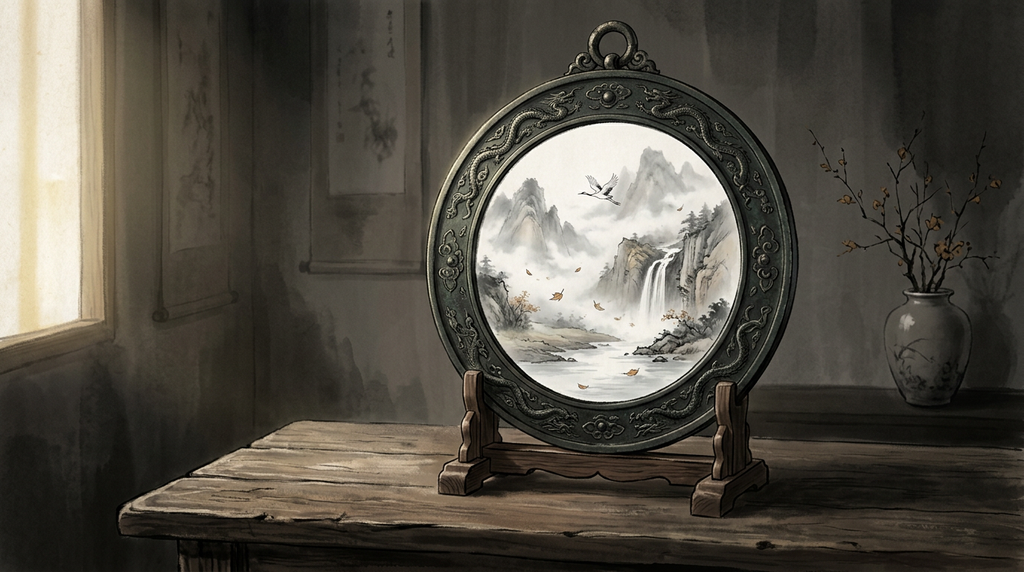
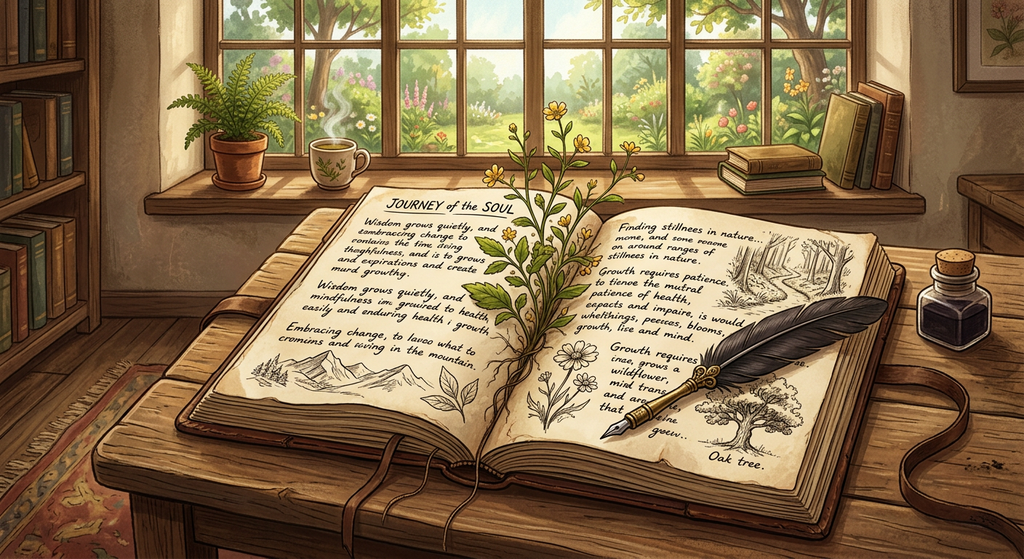
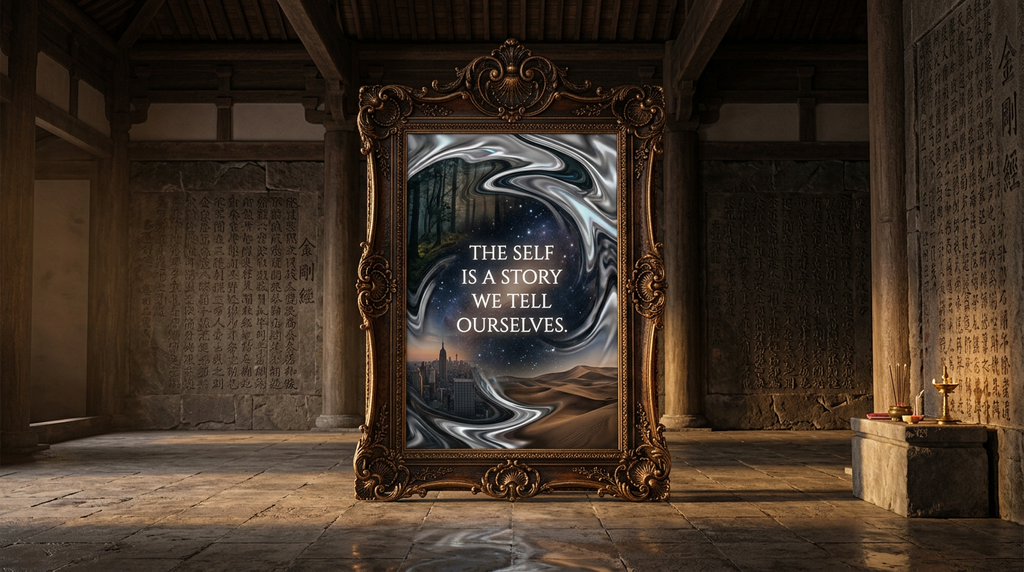
Onlangs zocht ik naar een quote. Het werd een passage uit de Zhuangzi. Niet omdat hij troostend is, maar omdat hij zo eenvoudig en onmogelijk tegelijk is: wees als een spiegel. Is dat niveau haalbaar?
Het is bovendien een quote die mooi past bij het najaar, het seizoen van loslaten: de tijd waarin de natuur laat zien wat de Zhuangzi al wist: alles komt en alles gaat.
De passage
De tekst staat aan het slot van hoofdstuk 7 van de Zhuangzi (內篇·應帝王):
至人之用心若鏡,不將不迎,應而不藏,故能勝物而不傷。
In het Nederlands:
Het hart van de volmaakte mens is als een spiegel: niets najagen, niets verwachten; hij weerspiegelt maar bewaart niet . Zo kan hij de tienduizend dingen ontmoeten zonder gekwetst te worden.
De spiegel uitgelegd
Wat maakt een spiegel tot spiegel?
不將 — hij achtervolgt niet wat vertrekt.
不迎 — hij loopt niet tegemoet wat nog moet komen.
應而不藏 — hij weerspiegelt wat er komt, maar bewaart niets.
Het beeld is haarscherp: een spiegel weigert niets en houdt niets vast. Het is een 1 op 1 beeld, in alle opzichten, zonder vertekening, zonder poespas, zonder iets mooier of minder mooi te maken dan het is. De vogel die langs fladdert verschijnt volledig en is het volgende moment weg, zonder ook maar een spoortje na te laten. De spiegel grijpt niet, oordeelt niet, blijft niet hangen. Daarom is hij onvermoeibaar: niemand kan hem “vol” maken, en niemand kan hem iets afnemen.
De Zhuangzi zegt niet: sluit je af van de wereld. Integendeel. De volmaakte mens laat de dingen volledig toe. Alleen hoeft hij ze niet te bezitten.
Die tienduizend dingen?
萬物 — letterlijk “tienduizend dingen”. Tienduizend staat in het klassiek Chinees niet voor een exact aantal, maar voor ontelbaar veel: het gehele veld van dingen dat bestaat. Zie Tao te Ching vers 1 !
Vaak wordt dit vertaald als “de aardse dingen”, maar dat is te smal en te negatief. 萬物 betekent: alles wat door de Dao voortgebracht wordt en weer vergaat. Zoals mensen, dieren, planten, het weer, gebeurtenissen maar ook je eigen gedachten, emoties en herinneringen. Alles wat verschijnt en weer verdwijnt.
Let op de twee nuances:
Niet alleen aards. Ook het weer, de seizoenen en je stemmingen horen erbij. Alles wat “geboren wordt” uit de wisselwerking van yin en yang.
Niet moreel bedoeld. In taoïstische teksten zijn de tienduizend dingen geen tegenstelling van “geestelijk”, zoals “aards” in onze taal vaak een beetje klein klinkt. De dingen zijn gewoon wat er is. De les van de spiegel is dan ook niet om je af te wenden van de wereld maar om haar te ontmoeten zonder haar vast te grijpen.
De context: de heerser die niet ingrijpt
De passage staat in hoofdstuk 7, 應帝王 (“Geschikt om heerser te zijn”), vlak vóór de beroemde slotparabel van Hundun (渾沌) — het wezen zonder gaten om mee te zien, eten en horen, dat vergaat wanneer zijn vrienden hem “vriendelijk” gaten proberen te boren.
Dat is geen toeval. Het hoofdstuk gaat over wu wei in de politiek: de heerser die regeert zonder te forceren, die het land bestuurt zoals een spiegel het licht ontvangt. Ingrijpen, “verbeteren”, vasthouden, het zijn de gaten die Hundun fataal worden.
De spiegel als politiek kompas
In de tijd van de Zhuangzi (de periode van de Strijdende Staten) was politiek vaak een synoniem voor brute kracht, wetgeving en actieve manipulatie om controle te behouden. De Zhuangzi stelt hier iets radicaals tegenover: de ideale heerser regeert door ‘niet-handelen’ (wu wei).
Als een heerser zijn eigen agenda, angsten of verlangens (projecties) op het land projecteert, raakt de samenleving uit balans. Een ‘spiegel-heerser’ daarentegen, reageert puur op wat de situatie op dat moment vraagt. Hij dwingt het volk niet in een mal, maar weerspiegelt de natuurlijke behoeften van de samenleving. Omdat hij niets probeert vast te houden of naar zijn hand te zetten, ontstaat er ruimte waarin de ’tienduizend dingen’ (de burgers en de natuur) uit zichzelf kunnen floreren. Het paradoxale taoïstische geheim is: hoe minder de heerser dwingt, hoe harmonieuzer het rijk functioneert.
Van de staat naar het individu
Hoewel dit destijds geschreven werd als advies voor vorsten, is de parallel met ons persoonlijke leven direct te trekken. Ieder van ons heerst immers over een eigen innerlijk rijk: de menselijke geest. Juist daar begint de ware wu wei: gedachten en emoties laten komen en gaan zonder in te grijpen, precies zoals een spiegel het licht ontvangt.
What can we learn from it?
Houding
Les voor ons
Najagen
Wat weg is, is weg — wie het najaagt, houdt lege handen over.
Verwachten
Wie wacht op morgen, mist wat zich nu aandient.
Bewaren
Wat je bewaart, belast je geest — de spiegel wordt nooit vol.
Weerspiegelen
Ontvangen wat komt, laten gaan wat gaat — zonder te grijpen, zonder te oordelen.
Een reflectie
De reflectie over de spiegel roept de vraag op wat er precies weerspiegeld wordt als ook gedachten en emoties tot de tienduizend dingen behoren, en of het denken ons denkt. De Zhuangzi biedt hiervoor een oefening in plaats van een antwoord.
Een praktische oefening
Ontvang gedachten zoals een spiegel een vogel ontvangt: volledig, vriendelijk en zonder haast om ze vast te houden. De zwemmer bij de Lüliang-waterval en de spiegel belichamen beide dezelfde weg van wu wei, en vullen elkaar mooi aan.
De paradox van de waarnemer
Als onze eigen gedachten, angsten en emoties ook tot de ’tienduizend dingen’ behoren, wie of wat is dan de spiegel die ze waarneemt? Hier raakt de Zhuangzi aan een diep psychologisch inzicht: vaak ‘denkt het denken ons’. We worden meegesleept door een automatische stroom van oordelen, waardoor we samenvallen met onze innerlijke onrust.
De spiegel staat hier voor het pure, getuigende bewustzijn. Wanneer een emotie of gedachte opkomt, is dat slechts een object dat door de spiegel trekt. Je bént niet de boosheid of de gedachte; jij bent de ruimte waarin deze verschijnt. Dit betekent dat de spiegel zelf altijd leeg, ongeschonden en helder blijft, hoe stormachtig de reflecties ook zijn.
Why we cherish one animal while another ends up on your plate in the evening
A quick preface. My wife and I have now been vegetarians for almost 30 years. I won't pretend I didn't eat meat myself in the past. But when you grow up as a child in a family where meat is the norm, that's simply "normal", until a change in your life pulls you out of that ignorance. I have great admiration for young children who already have this compassion from an early age, while their parents simply eat meat.
The newspaper coverage on 24 September 2026 was no small matter. A court case was needed just to be allowed to hang posters from Wakker Dier in NS train stations. Are we perhaps starting to feel uncomfortable? NS Stations preferred not to get involved in this discussion.
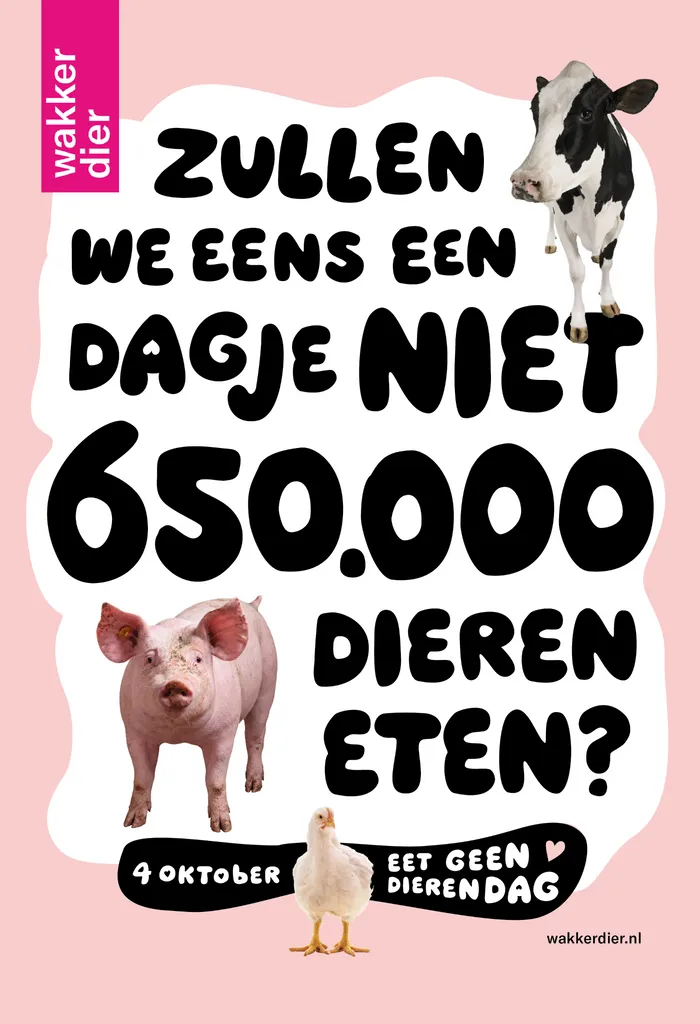
Anyone walking through a train station around 4 October 2026 might have seen a striking poster: a cow, a pig and a chicken on a light pink background, with the question: "Shall we try not eating 650,000 animals for one day?" It was officially Animal Day, but if Wakker Dier had its way, this time it would become "Eat No Animal Day".
Posters and data: Wakker Dier
That poster was almost not allowed to hang there. NS Stations considered Wakker Dier's campaign too sensitive: too likely to spark public debate. A judge in Utrecht thought otherwise. The posters were allowed to be shown, in the week around 4 October, the Eat No Animal Day.
It's a small news item, but it raises a much older and bigger question. A question that isn't about court rulings, but about ourselves.
Two kinds of animals?
Most people who see a dog starving will intervene. A kitten in the rain is taken to the shelter. An injured bird is picked up in a towel. Compassion, real and immediate.
But at the very same moment we do this, we eat animals daily that led very different lives: pigs that are curious, eager to learn, and social, chickens with a rich social life, cows that form friendships. To be precise: some 650,000 of them, every single day — and that's in the Netherlands alone.
How can those two worlds coexist in the same head, on the same day, sometimes in the same hour?
Psychologists call this the meat paradox: we love animals and we eat them. To bear that tension, our brain splits the animal world in two. One animal becomes a "family member", the other "dinner".
In psychology, this conflict is called cognitive dissonance: the uncomfortable feeling that arises when your actions (eating meat) don't align with your deeper conviction (compassion for animals). To soothe that discomfort, we unconsciously use four powerful rationalizations. Researchers also call these the 4 N's [1]. We justify our meat consumption by believing that it is:
Normal: Everyone around us does it; it's the social norm.
Natural: We often justify our meat consumption by believing it is "natural", pointing to our canine teeth. Biologically speaking, humans are indeed omnivores with a multifunctional set of teeth, but our canine teeth have been reduced over the course of evolution to small teeth for grinding food, not for tearing prey apart alive. The fact that our biology enables us to digest meat doesn't mean we must do so. Precisely thanks to our flexible evolution, we can today survive perfectly and healthily on a fully plant-based diet.
Necessary: The deeply ingrained fear that without meat we'll lack vitamins and minerals. Health authorities such as the Netherlands Nutrition Centre are clear on this: you don't need meat at all for your health. Protein, iron and B vitamins are easily obtained from legumes, nuts and whole grains. Only vitamin B12 (which is produced by bacteria) needs to be supplemented on a fully plant-based diet.
Nice (or Necessary): We simply find it too delicious to pass up.
It's not a matter of stupidity or insensitivity; it's a psychological defence mechanism that almost everyone shares. And like most mechanisms: it only works as long as we look away.
The trick of language
One of the most curious examples lies in language itself. The living animal is called a cow, the product is called beef. The animal is a pig; in the shop it is pork, but in the pan it often simply becomes a chop. In English it's even starker: cow versus beef, pig versus pork. What we eat is no longer an animal; it has become a thing.
That's no coincidence. It's a silent creation of distance. Whoever says "cow" sees an animal with eyes. Whoever says "piece of meat" sees dinner. Language quietly does the work that our conscience would otherwise have to do.
The same applies to terms like slaughter animal, meat cattle, production animal. Even the law makes a distinction: pets are given a protective status that farm animals — legally often described as production, not as beings — enjoy far less or not at all. Yet the pig living next to your pet may be older, more curious and more social than a dog.
Oh en dan de marketing: je kent die lachende stripfiguur koeien en lachende varkentjes op de verpakking van vleeswaren, het versterkt de truc van de taal met de truc van het beeld.
Not a moral lecture
Let's be clear: this is not a plea for everyone to become vegetarian starting tomorrow.
Most people who eat meat are not bad people — and that's precisely the point. They are people who would cry over an injured dog, and that same evening fry up a pork chop without thinking twice.
Incidentally, you see this mechanism very clearly in daily life. I think every vegetarian recognises it: you sit down at a dinner, say nothing about it, but the mere fact that you don't put any meat on your plate creates a palpable tension at the table. Meat eaters suddenly start apologising ("I hardly ever eat meat, you know") or become defensive. Why? Because the vegetarian at the table, entirely unintentionally, acts as a mirror. Your presence alone briefly pulls the other person out of their comfortable ignorance. The discomfort that arises is exactly the meat paradox playing out.
There is nothing wrong with compassion. On the contrary — the problem is that we carefully channel that compassion: towards the animals that happen to live within our walls, and away from the animals that happen to end up on our plates.
The mirror the poster holds up to us
The fact that a court case was needed to be allowed to show a poster with three farm animals and a simple question says it all. The Wakker Dier poster is not an attack at all! It is merely a mirror. And apparently what we see in that mirror is so confronting that NS Stations preferred to shield travellers from it.
If that discomfort is too great for the station, it shows that the meat paradox wavers the moment we are confronted with it.
The only thing that needs to happen
In the week of 24 September 2026, a simple poster with nothing but a question proved already too controversial. This raises the question of who exactly is being protected by the silence: the animals, or our own comfort?
The core is often simply daring to look without immediately judging, and being honest with yourself. If you feel discomfort at the thought of a slaughterhouse, that in itself is already an answer. Questions don't have to unleash heated debates; they may function as a small gesture of attention, like the injured bird in the towel.
This story was written from personal involvement; our whole family lives vegetarian out of compassion for animals. Choosing food that is free of suffering transcends biology and psychology, and brings inner peace. Whoever stops consuming an animal's suffering creates harmony for themselves.
Choosing plant-based (preferably unprocessed) food also reconnects you with the earth. You no longer eat from a factory system of production and consumption, but celebrate what nature gives us directly and in abundance — an awareness that brings a deep sense of gratitude to your plate.
Start with a vegetarian or meat-free day on Animal Day as a stepping stone towards structurally less meat. Because whoever dares to look into the mirror the poster holds up to us, will find the harmony that was always there.
Ik had ooit een gesprek met iemand over boeddhisme, mededogen en barmhartigheid. Tussen neus en lippen door werd me verteld: ‘De Boeddha zag ooit een vrouw in een greppel liggen met een dood kindje en zei tegen haar: “Je moet geen kinderen meer baren.”’ Meteen voelde ik en zei: dit klopt niet. Niet omdat ik het verhaal kende, maar omdat het zo haaks stond op alles wat ik over boeddhistische wijsheid dacht te weten.
Dit is een schoolvoorbeeld van hoe onze westerse of moderne blik een diepgaand verhaal kan vervormen tot iets kils en onbegripvols. Waarschijnlijk doelde mijn gesprekspartner op het verhaal van Kisa Gotami, die, verscheurd door verdriet, met het lichaam van haar overleden kindje naar de Boeddha kwam. In plaats van haar af te wijzen of een hard oordeel te vellen, vroeg hij haar om een mosterdzaadje te halen uit een huis waar nog nooit iemand was gestorven.
Terwijl Kisa van deur tot deur trok, ontdekte ze al snel dat elk gezin door verlies was geraakt. De Boeddha wees haar niet op een verbod, maar op een waarheid: lijden en vergankelijkheid zijn universeel. Door deze gedeelde menselijke ervaring onder ogen te zien, opende haar hart zich voor een diep, alomvattend mededogen, niet als een les, maar als een natuurlijke openbaring.
Door zo’n verhaal te reduceren tot een simpel verbod, mis je niet alleen de feiten, maar ook de ziel ervan: de boeddhistische barmhartigheid die juist uitgaat van begrip, verbinding en de erkenning van ons gedeelde menszijn.
De boodschap: als je een keer iets hoort en je niet weet of het klopt: laat het gaan en vertel het niet door. Denk altijd kritisch na. Een van de wijsheden uit de Kalama sutta.
De Kalama sutta: ware wijsheid vinden in een wereld van twijfel
Inleiding: een oproep tot kritisch denken
De Kalama Sutta is een van de meest geliefde en toepasbare leringen van de Boeddha. Wat deze sutta zo bijzonder maakt, is de nadruk op kritisch denken, persoonlijke verantwoordelijkheid en ethisch handelen in plaats van blind vertrouwen in tradities, autoriteiten of geschriften. Het is een bevrijdende boodschap: niet dat je je eigen interpretaties de vrije loop mag laten gaan, maar dat je reflecteert en onderzoekt wat werkelijk waar en heilzaam is.
In een wereld vol informatie, desinformatie en tegenstrijdige meningen, is deze lering nog steeds revolutionair. Het herinnert ons eraan dat ware wijsheid niet komt uit klakkeloos geloven, maar uit eigen ervaring en inzicht.
De oorspronkelijke tekst: De Kalama Sutta
Met de Kālāma’s van Kesamutta
Zo heb ik gehoord. Op een gegeven moment verbleef de Boeddha in het land der Kosalanen, waar hij met een grote groep bhikkhu’s (bedelmonniken) door het gebied trok. Hij kwam aan in Kesamutta, een dorp van de Kālāma’s. De Kālāma’s van Kesamutta hoorden:
“Het schijnt dat de ascetische Gotama—een Sakyaan, afkomstig uit een Sakyaanse familie—is aangekomen in Kesamutta. Hij heeft een goede reputatie: ‘Die Gezegende is volmaakt, een volledig ontwaakte Boeddha…’. Het is goed om zulke volmaakte wezens te zien.”
Toen gingen de Kālāma’s naar de Boeddha toe. Voordat ze aan één kant gingen zitten, bogen sommigen, sommigen wisselden groeten en beleefdheden uit, sommigen hielden hun handen in aanbiddingshouding naar de Boeddha, sommigen noemden hun naam en afkomst, terwijl anderen zwijgend bleven. Toen ze aan één kant zaten, zeiden de Kālāma’s tegen de Boeddha:
“Er zijn, heer, sommige asceten en brahmanen die naar Kesamutta komen. Zij leggen alleen hun eigen leer uit en bevorderen die, terwijl zij de leren van anderen afwijzen, belachelijk maken, verachten, en zwartmaken. Dan komen er weer andere asceten en brahmanen naar Kesamutta. Ook zij leggen alleen hun eigen leer uit en bevorderen die, terwijl zij de leren van anderen afwijzen, belachelijk maken, verachten, en zwartmaken. Dus, heer, zijn wij in twijfel en onzekerheid: ‘Wie van deze gerespecteerde asceten en brahmanen spreekt de waarheid, en wie spreekt onwaarheid?’”
Author’s Note: The Buddha’s warning against reliance on mere logical reasoning (takka) is not intended to dismiss common sense. On the contrary, rationality is highly valuable as a starting point for critically evaluating teachings. The pitfall lies in getting stuck in intellectual pride or endless theoretical debates. True wisdom arises when we bridge the gap between rational logic and practice: use your intellect to discern what resonates logically, and rely on your direct experience to test whether it truly works.
De Boeddha antwoordde:
“Het is begrijpelijk, Kālāma’s, dat jullie twijfelen en onzeker zijn. Twijfel is bij jullie opgekomen over een onzekere zaak. Ga niet af op mondelinge overlevering, ga niet af op traditie, ga niet af op geruchten, ga niet af op de heilige geschriften, Ga niet af op puur logisch redeneren, ga niet af op speculaties, ga niet af op het overwegen van bewijzen, ga niet af op het aannemen van een opvatting na overweging, ga niet af op de schijnbare bekwaamheid van een leraar, en denk niet: ‘Deze ascet is onze gerespecteerde leraar.’ Maar wanneer jullie zelf weten: ‘Deze dingen zijn onheilszaam, afkeurenswaardig, door wijze mensen gekritiseerd, en wanneer je ze beoefent, leiden ze tot schade en lijden’, dan moeten jullie ze laten varen.”
Wat denken jullie, Kālāma’s? Ontstaat hebzucht in een persoon voor zijn welzijn of voor zijn schade?
“Voor zijn schade, heer.”
“Een hebzuchtig persoon, overweldigd door hebzucht, doodt levende wezens, steelt, pleegt overspel, liegt, en moedigt anderen aan om hetzelfde te doen. Leidt dat tot zijn blijvende schade en lijden?”
“Ja, heer.”
“Wat denken jullie, Kālāma’s? Ontstaat haat in een persoon voor zijn welzijn of voor zijn schade?”
“Voor zijn schade, heer.”
“Een haatdragend persoon, overweldigd door haat, doodt levende wezens, steelt, pleegt overspel, liegt, en moedigt anderen aan om hetzelfde te doen. Leidt dat tot zijn blijvende schade en lijden?”
“Ja, heer.”
“Wat denken jullie, Kālāma’s? Ontstaat verwardheid in een persoon voor zijn welzijn of voor zijn schade?”
“Voor zijn schade, heer.”
“Een verward persoon, overweldigd door verwardheid, doodt levende wezens, steelt, pleegt overspel, liegt, en moedigt anderen aan om hetzelfde te doen. Leidt dat tot zijn blijvende schade en lijden?”
“Ja, heer.”
“Wat denken jullie, Kālāma’s, zijn deze dingen heilszaam of onheilszaam?”
“Onheilszaam, heer.”
“Afkeurenswaardig of loffelijk?”
“Afkeurenswaardig, heer.”
“Gekritiseerd of geprezen door wijze mensen?”
“Gekritiseerd door wijze mensen, heer.”
“Wanneer jullie ze beoefenen, leiden ze tot schade en lijden, of niet? Of hoe zien jullie dit?”
“Wanneer we ze beoefenen, leiden ze tot schade en lijden. Zo zien we het.”
“Dus, Kālāma’s, toen ik zei: ‘Ga niet af op mondelinge overlevering, ga niet af op traditie, ga niet af op geruchten, ga niet af op de heilige geschriften, Ga niet af op puur logisch redeneren, ga niet af op speculaties, ga niet af op het aannemen van een opvatting na overweging, ga niet af op de schijnbare bekwaamheid van een leraar, en denk niet: “Deze ascet is onze gerespecteerde leraar.” Maar wanneer jullie zelf weten: “Deze dingen zijn onheilszaam, afkeurenswaardig, door wijze mensen gekritiseerd, en wanneer je ze beoefent, leiden ze tot schade en lijden”, dan moeten jullie ze laten varen.’ Dat is wat ik zei, en om die reden zei ik het.”
Ga niet af op mondelinge overlevering, ga niet af op traditie, ga niet af op geruchten, ga niet af op de heilige geschriften, Ga niet af op puur logisch redeneren, ga niet af op speculaties, ga niet af op het aannemen van een opvatting na overweging, ga niet af op de schijnbare bekwaamheid van een leraar, en denk niet: ‘Deze ascet is onze gerespecteerde leraar.’ Maar wanneer jullie zelf weten: ‘Deze dingen zijn heilszaam, loffelijk, geprezen door wijze mensen, en wanneer je ze beoefent, leiden ze tot welzijn en geluk’, dan moeten jullie ze aannemen en vasthouden.
Wat denken jullie, Kālāma’s? Ontstaat tevredenheid in een persoon voor zijn welzijn of voor zijn schade?
“Voor zijn welzijn, heer.”
“Een tevreden persoon, niet overweldigd door hebzucht, doodt geen levende wezens, steelt niet, pleegt geen overspel, liegt niet, en moedigt anderen niet aan om hetzelfde te doen. Leidt dat tot zijn blijvende welzijn en geluk?”
“Ja, heer.”
“Wat denken jullie, Kālāma’s? Ontstaat liefde in een persoon voor zijn welzijn of voor zijn schade? … Ontstaat inzicht in een persoon voor zijn welzijn of voor zijn schade? … Leidt dat tot zijn blijvende welzijn en geluk?”
“Ja, heer.”
“Wat denken jullie, Kālāma’s, zijn deze dingen heilszaam of onheilszaam?”
“Heilszaam, heer.”
“Loffelijk of afkeurenswaardig?”
“Loffelijk, heer.”
“Geprezen of gekritiseerd door wijze mensen?”
“Geprezen door wijze mensen, heer.”
“Wanneer jullie ze beoefenen, leiden ze tot welzijn en geluk, of niet? Of hoe zien jullie dit?”
“Wanneer we ze beoefenen, leiden ze tot welzijn en geluk. Zo zien we het.”
“Dus, Kālāma’s, toen ik zei: ‘Ga niet af op mondelinge overlevering, ga niet af op traditie, ga niet af op geruchten, ga niet af op de heilige geschriften, Ga niet af op puur logisch redeneren, ga niet af op speculaties, ga niet af op het aannemen van een opvatting na overweging, ga niet af op de schijnbare bekwaamheid van een leraar, en denk niet: “Deze ascet is onze gerespecteerde leraar.” Maar wanneer jullie zelf weten: “Deze dingen zijn heilszaam, loffelijk, geprezen door wijze mensen, en wanneer je ze beoefent, leiden ze tot welzijn en geluk”, dan moeten jullie ze aannemen en vasthouden.’ Dat is wat ik zei, en om die reden zei ik het.”
De vier onbeperkte houdingen
Vervolgens zei de Boeddha:
“Wanneer die edele discipel vrij is van vijandigheid en kwade wil, onbevlekt en gezuiverd van hart, dan beoefent hij de vier onbeperkte houdingen:
Liefdevolle vriendelijkheid (Mettā): Hij mediteert door een hart vol liefdevolle vriendelijkheid uit te stralen naar één richting, en naar de tweede, en naar de derde, en naar de vierde. Op dezelfde manier: boven, beneden, overal, in alle richtingen, naar de hele wereld—overvloedig, uitgestrekt, grenzeloos, vrij van vijandigheid en kwade wil.
Mededogen (Karuṇā): Hij mediteert door een hart vol mededogen uit te stralen naar één richting, en naar de tweede, en naar de derde, en naar de vierde. Op dezelfde manier: boven, beneden, overal, in alle richtingen, naar de hele wereld—overvloedig, uitgestrekt, grenzeloos, vrij van vijandigheid en kwade wil.
Meelevende vreugde (Muditā): Hij mediteert door een hart vol meelevende vreugde uit te stralen naar één richting, en naar de tweede, en naar de derde, en naar de vierde. Op dezelfde manier: boven, beneden, overal, in alle richtingen, naar de hele wereld—overvloedig, uitgestrekt, grenzeloos, vrij van vijandigheid en kwade wil.
Gelijkmoedigheid (Upekkhā): Hij mediteert door een hart vol gelijkmoedigheid uit te stralen naar één richting, en naar de tweede, en naar de derde, en naar de vierde. Op dezelfde manier: boven, beneden, overal, in alle richtingen, naar de hele wereld—overvloedig, uitgestrekt, grenzeloos, vrij van vijandigheid en kwade wil.”
De vier troostrijke gedachten
Wanneer die edele discipel een geest heeft die vrij is van vijandigheid en kwade wil, onbevlekt en gezuiverd, dan heeft hij in dit leven vier troostrijke gedachten gewonnen:
‘Als er een andere wereld is, en goede en slechte daden vruchten dragen, dan zal ik, wanneer dit lichaam uiteenvalt na de dood, wedergeboren worden in een goede bestemming, een hemelse wereld.’ Dit is de eerste troostrijke gedachte die hij heeft gewonnen.
‘Als er geen andere wereld is, en goede en slechte daden geen vruchten dragen, dan zal ik in dit leven vrij zijn van vijandigheid en kwade wil, onbezorgd en gelukkig.’ Dit is de tweede troostrijke gedachte die hij heeft gewonnen.
‘Als slechte dingen gebeuren met mensen die slechte dingen doen, dan, omdat ik geen slechte bedoelingen heb en geen slechte dingen doe, hoe kan lijden mij dan raken?’ Dit is de derde troostrijke gedachte die hij heeft gewonnen.
‘Als slechte dingen niet gebeuren met mensen die slechte dingen doen, dan zie ik mezelf toch als zuiver aan beide kanten.’ Dit is de vierde troostrijke gedachte die hij heeft gewonnen.
Wanneer die edele discipel een geest heeft die vrij is van vijandigheid en kwade wil, onbevlekt en gezuiverd, dan heeft hij deze vier troostrijke gedachten gewonnen in dit leven.
“Dat is zo, Gezegende! Dat is zo, Verhevene! Wanneer die edele discipel een geest heeft die vrij is van vijandigheid en kwade wil, onbevlekt en gezuiverd, dan heeft hij deze vier troostrijke gedachten gewonnen in dit leven…”
Uitstekend, heer! Uitstekend! … Wij zoeken onze toevlucht tot de Boeddha, tot de Dhamma, en tot de Saṅgha. Vanaf deze dag, moge de Boeddha ons herinneren als lekenvolgelingen die voor het leven hun toevlucht hebben gezocht.”
Reflectie: verbinding met jouw pad
⚠️ De westerse valkuil: Kritisch denken is geen individualisme
In het Westen wordt de Kalama Sutta vaak gelezen als: “Ik hoef naar niemand te luisteren, ik bepaal mijn eigen waarheid op basis van mijn eigen gevoel.” Dit is een misvatting.
De Boeddha roept niet op tot spiritueel egoïsme. Hij benadrukt in de tekst heel duidelijk dat je eigen onderzoek altijd gepaard moet gaan met een belangrijk filter: “wat geprezen wordt door de wijzen”. Omdat onze eigen geest vertroebeld kan zijn door verlangen, trots of blinde vlekken, hebben we beslist de spiegel van leraren en spirituele vrienden (de Sangha) nodig!
Gezond zelfonderzoek in het boeddhisme betekent dus niet dat je blind vaart op je eigen ego, maar dat je je eigen gedachten durft te toetsen aan wijsheid, ethiek en het welzijn van de wereld om je heen. Durf jezelf kwetsbaar op te stellen.
Praktische toepassing
Praktijk boven theorie: Merk je dat je vastloopt in een discussie of piekergedachte? Vraag jezelf dan af of je vastzit in puur logisch redeneren op papier. Verleg je focus van ‘klinkt dit logisch?’ naar ‘wat is de feitelijke uitwerking van deze gedachte in mijn dagelijks leven?’.
Meditatieoefening: Beoefen de vier onbeperkte houdingen tijdens het lopen of zitten.
Afsluiting: een uitnodiging tot verdere verkenning
De Kalama Sutta herinnert ons eraan dat ware wijsheid niet komt uit boeken, maar uit het ervaren van het leven zelf. Net zoals de Boeddha de Kālāma’s oproept om te onderzoeken, zo nodigt deze sutta ons uit om kritisch te denken, te reflecteren en te leven met mededogen.
“Ga niet af op mondelinge overlevering, traditie of geschriften. Onderzoek, en aanvaard alleen wat je zelf, én in lijn met de wijzen, als heilzaam ervaart” — De Boeddha
A Tale of Love, Courage, and Letting Go for the Moon Festival
So it all began…
magine this: the sky blazes with heat, the earth suffers under extreme drought, and ten suns shine all at once! How would you feel? It would probably be unbearable! Thousands of years ago, this was reality, until a brave archer, Hou Yi, saved the world. But the most beautiful part of the story? It’s not just about strength, it’s about love, sacrifice, and letting go of what you hold most dear.
The story
Saving the world
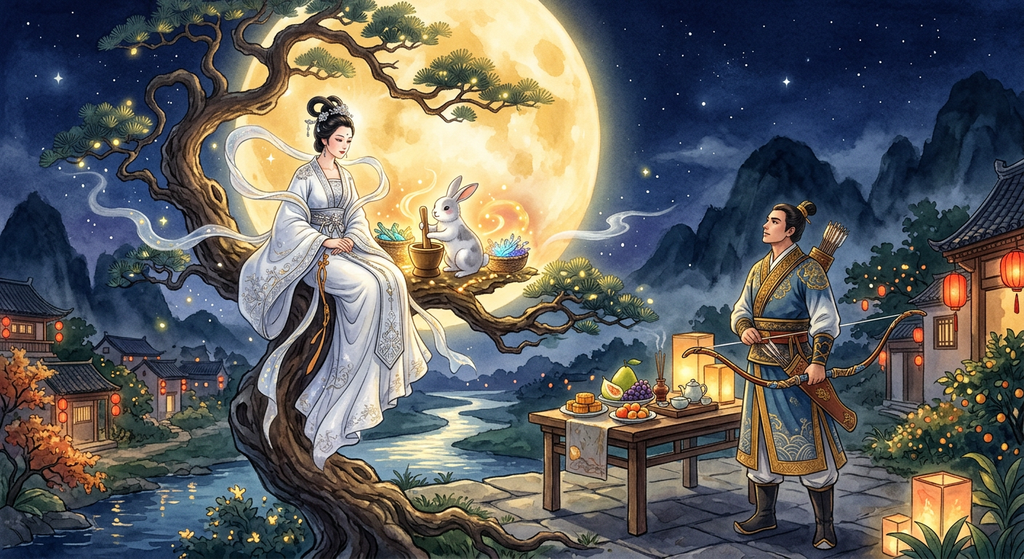
Hou Yi was no ordinary archer. With his bow and arrow, he shot down nine of the ten suns from the sky, allowing the earth to breathe again. The people cheered! As a reward, the Queen of the West gave him a magical elixir: one sip, and he would become immortal—a god in the heavens forever. But Hou Yi thought: What good is heaven if my beloved Chang’e cannot join me? So what did he do? He hid the elixir in a small box beneath their bed!
The thief in the night
Unfortunately, there was a jealous apprentice, Peng Meng, who wanted to steal the elixir. While Hou Yi was out hunting, Peng Meng broke in and demanded that Chang’e hand over the elixir. She didn’t hesitate for a moment. If I give this to him, he will bring misfortune to the world, she thought. So… she drank it herself!
Chang’e’s Escape to the Moon
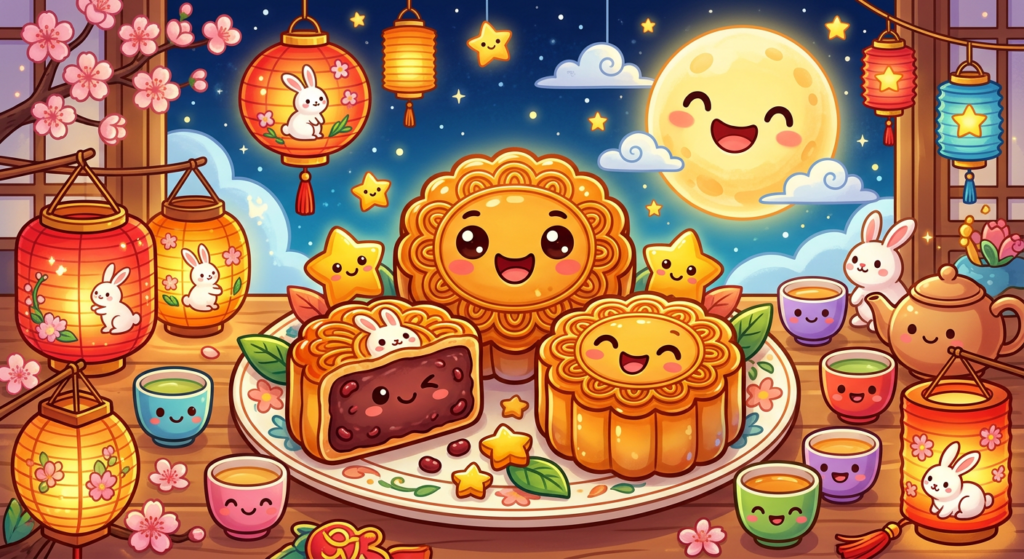
Suddenly, Chang’e felt as light as a feather. She floated up to the sky and landed on the moon, the closest place to Earth, so she could still see Hou Yi. When he returned home and discovered what had happened, he was heartbroken, yet proud! He set up a table in the garden with moon cakes (her favorite!) and fruit as an offering to the moon. The villagers joined in, and thus, the Moon Festival was born.
The Moon´s lesson
If you look up at the moon tonight, you might see Chang’e sitting there with her white rabbit, also known as the Pounder or the Jade Rabbit. This rabbit pounds medicinal herbs in a mortar (or the elixir of life)—how magical is that? The moon is round and full, just like our hearts when we are grateful. But do you know what’s most beautiful? Chang’e let go of her life on Earth, yet her love for Hou Yi remained forever. That is the power of letting go: sometimes, you must give up something to find something even more beautiful.
Activities for the Moon Festival
Imagine: if you had that magical elixir, what would you do? Drink it yourself, share it, or hide it away? Why?
Look at the moon!
Tonight, the moon is extra big and round. Draw what you see! Maybe you’ll spot Chang’e and her Jade Rabbit! If you could live on the moon, what would you bring with you?
Let’s draw a beautiful moon together with Chang’e and her Jade Rabbit!
Letting go
Write down on a piece of paper what you want to let go of (like anger or fear), then fold it in half. After that, we’ll all tear up our papers at the same time, letting go of what we wrote.
Just like Chang’e, you let it go… to make space for something new.
At the bottom of this page, you will find a recipe for 10 to 12 Mooncakes!
Conclusion
This story aligns beautifully with Taoism, where letting go and harmony with nature are central.
The Moon Festival reminds us that true happiness doesn’t come from holding on, but from sharing. Just like the moon, which waxes and wanes between fullness and darkness, we too move between joy and sorrow. But do you know what always remains? The love and wisdom we share with one another.
So: savor a delicious moon cake, share this story with everyone you love, and let your heart be as radiant and warm as the full moon tonight!
Happy Moon Festival! 🌕✨
PS: In 2026, the Moon Festival falls on September 25, and in 2027, it will be on September 15.
Recipe to make Mooncakes yourself
🛒 Ingredients (for approx. 10 to 12 small mooncakes)
For the dough:
150 grams of flour basic wheat flour
90 g liquid honey or maple syrup (as an easy substitute for traditional invert syrup)
30 ml plantaardige olie (bijv. zonnebloemolie)
1 mespuntje baksoda (gemengd met 1 theelepel water)
Voor de vulling & afwerking:
350 g kant-en-klare rode bonenpasta (Red Bean Paste) of lotuszaadpasta
1 eidooier (geklopt met 1 eetlepel water, voor de glans)
👩🍳 Stappenplan
Stap 1: Het deeg maken
Meng de honing, plantaardige olie en het baksoda-watermengsel in een kom goed door elkaar.
Zeef de bloem erboven en spatel het rustig door het mengsel tot er een samenhangend deeg ontstaat. Kneed niet te lang!
Wikkel het deeg in vershoudfolie en laat het minimaal 45 minuten rusten op kamertemperatuur.
Stap 2: Portie verdelen
Verdeel het deeg in gelijke balletjes van ongeveer 20 gram per stuk.
Verdeel de bonenpasta in balletjes van ongeveer 35 gram per stuk. (De vulling is traditioneel iets groter dan het deegjasje).
Stap 3: Vullen en vormen
Neem een deegballetje en druk dit plat tussen je handen (of rol uit tussen plasticfolie) tot een dun, rond schijfje.
Leg een bal bonenpasta in het midden van het deeg.
Vouw het deeg voorzichtig om de vulling heen. Duw het deeg langzaam omhoog totdat de vulling volledig is ingesloten. Rol het daarna kort tussen je handen tot een gladde bal.
Bestuif de deegbal heel licht met een beetje bloem. Plaats de bal in de mooncake-stempel en druk stevig plat op een met bakpapier beklede bakplaat. Schiet de mooncake voorzichtig uit de vorm.
Stap 4: Bakken
Verwarm de oven voor op 180 °C.
Bak de mooncakes eerst 5 minuten. Haal ze daarna uit de oven en laat ze 5 minuten afkoelen.
Bestrijk de bovenkant van de mooncakes heel dun met het geklopte eimengsel (gebruik een kwastje). Tip: Doe dit heel licht, anders lopen de mooie details van de stempel vol.
Zet de mooncakes terug in de oven en bak ze in nog eens 8 tot 10 minuten goudbruin.
💡 Belangrijke tip voor de smaak!
Eet de mooncakes niet direct warm uit de oven. Ze zijn dan nog erg droog en hard. Laat ze afkoelen en bewaar ze 1 tot 2 dagen in een afgesloten trommel. Het deeg absorbeert dan de olie uit de vulling, waardoor de buitenkant heerlijk zacht, glanzend en vol van smaak wordt (dit proces noemen ze ’the return of oil’).
Alles in de natuur vult elkaar aan als er geen verstoring is. Zo is het ook met ons: begin bij jezelf, en de wereld volgt.
In een wereld vol chaos, geweld en onrecht voelen we ons vaak klein en machteloos. Je zet de televisie aan of opent een nieuws-app, en de negatieve berichten vliegen je om de oren. Het is logisch dat je dan denkt: wat kan ik hier in mijn eentje nou aan veranderen?
De sleutel heb je zelf in je hand
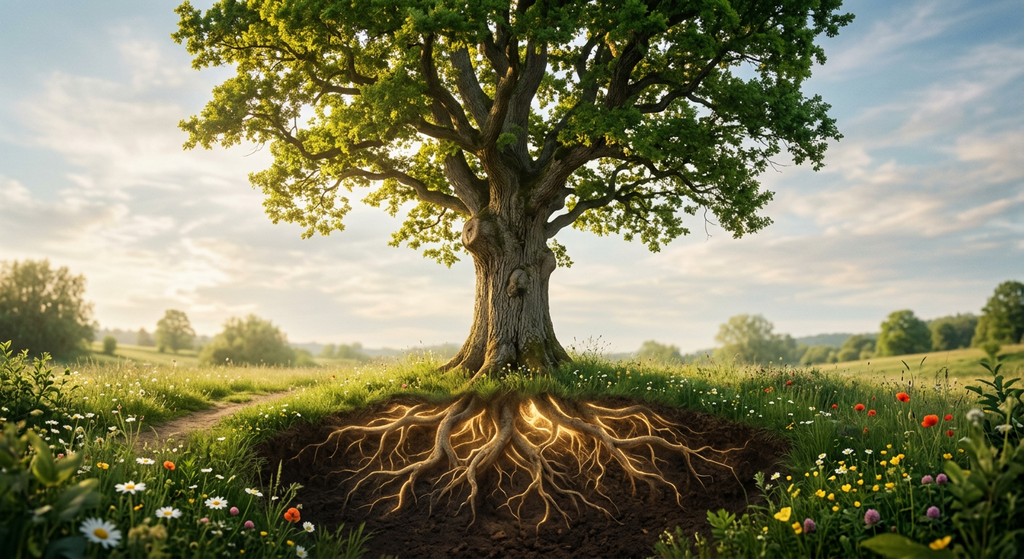
Het oude Chinese geschrift Het Grote Leren (Daxue) leert ons dat ware verandering altijd van binnenuit begint. Net zoals een boom niet kan groeien zonder sterke wortels, zo kan de wereld niet helen zonder dat wij de basis herstellen. Die basis, dat ben jijzelf.
Van binnen naar buiten: het rimpeleffect
De Oosterse filosofie omschrijft een prachtige route waarlangs vrede zich verspreidt. Zie het voor je als een steen die je in een stille vijver gooit. De rimpelingen worden steeds groter en bereiken uiteindelijk de overkant.
De boodschap is simpel maar diepgaand: je kunt niet bij de laatste stap beginnen. Je kunt de wereld pas herstellen als je begint bij de wortel. En, ik weet het, de praktijk is een stuk weerbarstiger! Maar je moet ergens beginnen, toch?
Wat kun je zelf vandaag gaan doen?
Grote wereldproblemen en soms chaotische toestanden in de stad of in je buurt lijken onoverkomelijk. Toch kun je een probleem vertalen naar een kleine, tastbare actie in je eigen dagelijkse leven. Hier zijn een paar voorbeelden van hoe je zelf het verschil kunt maken:
Oorlog en geweld
Natuurlijk kun je in je eentje geen wereldwijd conflict stoppen. Maar je kunt wel vrede zaaien in je eigen kring. Voed kinderen op met empathie en word niet bij het minste geringste boos. Kinderen mogen (moeten!) ook kind kunnen zijn. Probeer hen en jezelf te leren om conflicten op te lossen met woorden in plaats van agressie en luister vooral ook naar de ander. Klinkt allemaal simpel, weet ik, we hebben zelf ook drie kinderen die inmiddels volwassen zijn. Vergeet niet ¨je oogst wat je zaait¨.
Discriminatie
Gelijkheid begint in je eigen straat, op je werk en bij de sportclub. Sta op tegen onrecht in je directe omgeving. Spreek je uit als er een flauwe of kwetsende grap wordt gemaakt en zorg dat iedereen in jouw buurt zich gezien en geaccepteerd voelt.
Het milieu
De zorg voor de aarde is een mooie vorm van harmonie. En je hoeft je hele leven niet meteen om te gooien. Begin klein: consumeer bewust, kies wat vaker voor duurzame producten, gooi geen afval op straat (en leer dat ook je kinderen) en inspireer de mensen om je heen om hetzelfde te doen.
Eenzaamheid
Noem het maar de stille crisis in onze moderne samenleving. De oplossing is vrij simpel en kost geen geld, alleen een beetje aandacht. Leg je telefoon eens weg, kijk omhoog en maak echt contact. Een vriendelijke groet naar de pakketbezorger of een kort praatje met de buurvrouw kan iemands hele dag veranderen.
Neem gewoon even de tijd om na te denken
Dit blogje is geen handleiding die je even snel moet afvinken. Het is een uitnodiging om stil te staan bij je eigen leven. Neem bijvoorbeeld eens de tijd om na te denken hoe je zelf een kleine, oprechte stap kunt zetten om daar meer harmonie te brengen.
Je hoeft de wereld niet in je eentje te redden. Je hoeft alleen maar te beginnen waar je staat. De rest volgt vanzelf.
Confucius
Dit idee is niet nieuw. Duizenden jaren geleden werd dit al prachtig omschreven in de Lǐ Jì!
In het boek Lǐ Jì, “Boek der Riten”, hoofdstuk Dà Xué, “Het Grote Leren”, paragraaf 2 staat namelijk:
De klassieken die een verheven deugd in het hele koninkrijk wilden verspreiden, brachten eerst hun eigen staten op orde. Om hun staten op orde te brengen, zorgden zij eerst voor harmonie binnen hun gezinnen. Om hun gezinnen harmonieus te maken, cultiveerden zij eerst zichzelf. Om zichzelf te cultiveren, zuiverden zij eerst hun hart. Om hun hart te zuiveren, zochten zij eerst naar oprechtheid in hun gedachten. Om oprecht te zijn in hun gedachten, breidden zij eerst hun kennis zo ver mogelijk uit. Dit verrijken van kennis lag in het doorgronden van de essentie der dingen. Zodra de dingen werden doorgrond, werd hun kennis compleet. Omdat hun kennis compleet was, waren hun gedachten oprecht. Omdat hun gedachten oprecht waren, werden hun harten gezuiverd. Omdat hun harten gezuiverd waren, raakten zijzelf gecultiveerd. Omdat zijzelf gecultiveerd waren, heerste er harmonie in hun gezinnen. Omdat er harmonie heerste in hun gezinnen, werden hun staten rechtvaardig bestuurd. En omdat hun staten rechtvaardig bestuurd werden, werd het hele koninkrijk vredig en gelukkig. Van de Zoon des Hemels tot aan het gewone volk: iedereen moet zelfcultivatie zien als de wortel van al het andere. Het kan niet zo zijn dat wanneer de wortel wordt verwaarloosd, dat wat eruit voortkomt toch goed tot bloei komt. Het is nog nooit voorgekomen dat men weinig zorg droeg voor wat van groot belang is, en tegelijkertijd veel zorg besteedde aan wat er nauwelijks toe doet.
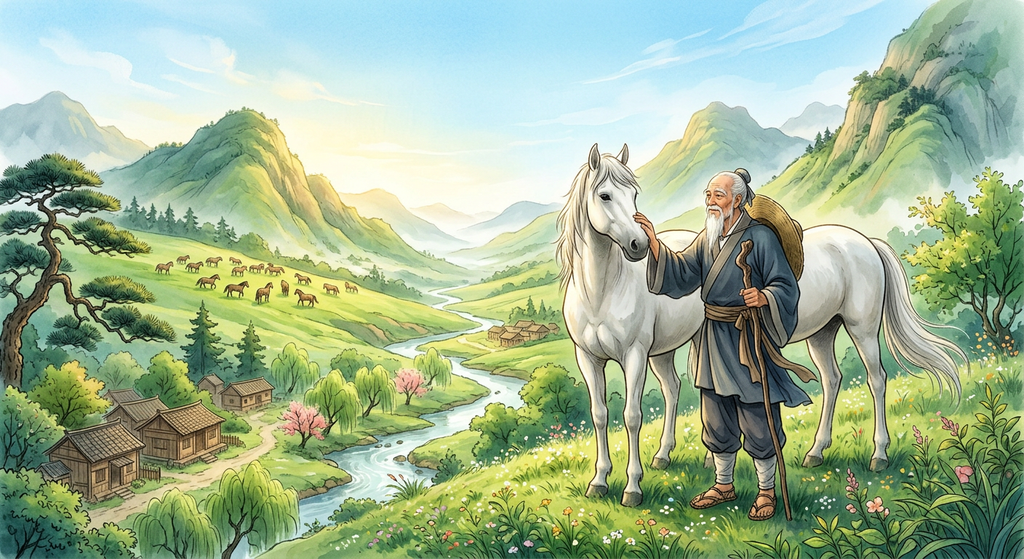
In een klein dorpje, omringd door groene heuvels, woonde een oude boer. Hij had maar één paard, maar hij hield er ontzettend veel van. Op een ochtend was de staldeur niet goed gesloten. Hierdoor kon zijn paard ontsnappen naar de wilde bergen.
The neighbors came running over. "Oh no!" they cried.
"Your only horse is gone! What terrible misfortune!"
The farmer looked at the open meadow, shrugged, and said calmly:
"Perhaps. Perhaps not. We shall see."
A week later, something miraculous happened. The horse returned, and not alone—it had brought ten wild horses with it! The neighbors cheered.
"What good luck!" they exclaimed. "From one horse to eleven! You are a rich man now!"
The farmer stroked his horse and said:
"Perhaps. Perhaps not. We shall see."
The next day, the farmer’s son tried to tame one of the wild horses. The horse startled, threw him off, and the son broke his leg.
The neighbors shook their heads.
"What a disaster!" they sighed. "Now he can’t help on the farm. What bad luck!"
The farmer looked at his son, sitting painfully on the ground, and said:
"Perhaps. Perhaps not. We shall see."
A few days later, the emperor’s army came to the village. War had broken out, and they were conscripting all the young, able-bodied men to fight. The neighbors wept, knowing their sons might never return. But when the soldiers reached the farmer’s house, they saw his son with his broken leg.
That evening, the neighbors gathered around the farmer. "You were right," they said to him.
"We thought it was misfortune, but it turned out to be a blessing. Your son could stay safely at home!"
The old farmer smiled at his son, safe at home, and said:
"Perhaps. Perhaps not."
The farmers lesson: Wuwei
What was the farmer’s secret?
While the neighbors swung between joy and sorrow, he remained as calm as a still lake. He did not fight life. He flowed with it, like water in a river.
The farmer taught us Wuwei (無為)—not doing nothing, but acting without resistance.
It is like cycling with the wind at your back instead of against it. He did not waste energy fighting the current of life. He trusted the natural course of things.
What Is this stream (flow)?
That great, mysterious river that connects all things is called the Dao (道)—the Way. It is the invisible force that changes the seasons, makes trees grow toward the sun, and keeps the universe in balance. Nature follows the Dao perfectly, without effort.
The caring source behind the stream (flow)
In chapter 1 of the Tao Te Ching, this cosmic flow is described as the Mother of the ten thousand things, the loving origin of all. The Tao does not force nor rule with a heavy hand, but allows life to arise and grow organically, just as a mother cares for her children.
When the farmer moves with the Dao and practices Wuwei, he rests in the deep trust that he is carried by this natural, nurturing stream. He does not fight the current but lets himself be guided by the wisdom of nature itself.
A question to carry with You
This story invites for reflection: How often do we fight the current? How often do we call something "bad luck" or "good luck", when we don’t yet know how it will end?
The farmer teaches us that trusting the Dao, trusting the natural flow of life, brings peace. Maybe it’s as simple as this: move with the stream (flow) rather than against it.
My Journey with the Diamond Sutra: From Confusion to Freedom
Introduction
The Diamond Sutra is not just a book to me. It is a mirror, a guide, and above all, a powerful tool that has turned my life upside down. Yet, it was not love at first sight. In fact, at first, it mostly caused confusion. But as is often the case in life, it was precisely in that confusion that the key to insight lay.
Meeting My Fellow Traveler on the Path
During the visits my wife and I made to the Buddha hall where we gather, I met someone who would change my course on the Path forever. He was visiting, and for some reason, there was an inexplicable click, as if we had known each other for I don’t know how long. [blog: Yuanfen]
Since he has returned to Taiwan, we communicate via an app, studying the Diamond Sutra and other Buddhist texts together, and trying to apply their teachings in daily life. His spiritual roots run deeper than mine as a Westerner. His understanding of emptiness, non-attachment, and letting go of the ego is far more developed than my own. I am immensely grateful to be able to walk this path with him. We learn so much from each other, not by teaching, but by searching, doubting, and growing together. Especially the openness to doubt, the courage to be vulnerable—it’s wonderful when there’s no ego involved.
The Struggle with the Ego: "Where Am I?"
During our discussions about the Diamond Sutra, I often found myself stuck.
The text says: "There is no self (ego). Make sure your ego is no longer in charge. Leave your ego at home, put it in a closet, and lock the door." Sounds simple, right? But in practice, it was chaotic.
Because what happens when you try to let go of your ego? The ego fights back. It doesn’t want to disappear. It wants to stay in control, because that’s what it’s good at. I noticed that, despite my sincere desire to change, I sometimes came across as irritated, frustrated, or even unkind. My daoyou (fellow traveler) remained calm, respectful, and compassionate in all those moments—a mirror showing me how far I still had to grow.
The confusion arose from the paradoxes the Diamond Sutra presents:
"There is no self" → But then who am I?
"Let go of everything" → But how can I do that when I’m so attached to my possessions, my identity, my habits?
"Emptiness" → Does that mean nothing matters?
My daoyou helped me realize that it’s not about destroying the ego, but about breaking its grip. The ego is not an enemy to be defeated, but an illusion to be released.
Four Months Later: The Change
In May this year, we met in person for the first time. Four months later, I notice how the Diamond Sutra is slowly doing its work. What once seemed indispensable has lost its hold on me.
Take a collection of antique radios as an example. A passion that occupied a large part of my life for years: collecting, restoring, the technology, the history. And now? The emotional weight is gone. Not because I got rid of the radios right away, but because the emotional attachment has vanished. The feeling of 'I must have this' or 'this is what defines me' is gone.
Why?
Because I wanted change. I wanted to live differently. I wanted to mean something to others, instead of being solely occupied with myself. The Diamond Sutra has taught me that true freedom does not come from owning more, but from holding on less.
Letting Go of Attachments
As I continue on this Path, I have decided to sell all items related to my hobbies, including a collection of antique radios and everything associated with them. These belongings, which once brought so much joy and formed a major part of my identity, no longer carry the same emotional weight.
It’s not that I’ve lost appreciation for them, but I’ve come to realize that true fulfillment does not come from possessions.
Our children have shown no interest in these items, and it feels unfair to burden them with things that don’t fit into their lives. Instead, I’m selling this collection so that others who share the same passion can find joy in them. It’s a way to pass on the happiness these radios once brought me to someone else who will cherish them.
The Proceeds: A New Beginning
The proceeds from the sale will be well spent. Ultimately, they will contribute to something meaningful for us as practitioners of the Three Teachings (Confucianism, Taoism, and Buddhism), something that aligns with the values of compassion, community, and spiritual growth that the Diamond Sutra has taught me. It is a way to transform material attachments into something that serves a greater purpose.
Reflection: The Concept of "No-Self"
A common misconception about the Diamond Sutra is that "no-self" or "no-ego" (anātman) means that you do not exist. Nothing could be further from the truth. You do exist, but the difference lies in how you perceive it: relatively or absolutely.
We live in a relative world, where everything must be explainable and describable. We give things names, like "a table". But according to the Diamond Sutra, it is not a table—and that’s precisely why we call it a table.
How Does That Work?
Imagine you see a table. That table once began as a seed growing in the earth, nourished by rain, until it became a tree. After fifty years, that tree was cut down to make planks. A carpenter bought nails, screws, maybe some paint, and turned those planks into the object we now call a table.
In reality, the table is a composition of countless non-table elements: the tree, the rain, the earth, the sun, the carpenter, the nails, and time. Without all these elements, there would be no table. So is it really a table? Or is it a temporary manifestation of causes and conditions?
The Diamond Sutra teaches us that we cling to labels and concepts, while reality is far more complex and deeply interconnected.
The Paradox: why you aren't the sticker on your forehead
In our everyday, logical way of thinking, we reason very simply: A = A. That is just how we are "programmed." A table is a table, a hobby is a hobby, and Kees is Kees. It is simply what it is, right?
But the Diamond Sutra shakes things up and says: A is NOT equal to A.
Why is that?
Because in daily life, we constantly put stickers (labels) on ourselves and the world around us. We give something a name and assume that means it is fixed forever. But in reality, everything changes continuously. Nothing has a fixed, unchangeable identity. The sticker is not the actual reality; it is just a label. A temporary thing.
Take myself as an example. I am Kees. I have been called that my whole life, and everyone knows me by that name. But am I still exactly the same Kees as before? No. My cells renew themselves, I am getting older, and my inner world has completely transformed since I started studying the Diamond Sutra. For instance, I am no longer trapped in the emotional attachment to my old hobbies. It might not apply to everyone, but personally, it feels like a true liberation.
Anyway, the sticker still says 'Kees' (A = A), but the person underneath that sticker changes every single day (A is not A).
Precisely because I do not have a fixed, unchangeable identity, I have the ultimate freedom to grow, to change, and to let go.
Conclusion: Freedom Through Letting Go
"No-self" does not mean you are not there. It means you are not attached to a static, unchanging idea of who or what you are. You are a dynamic, interconnected whole—just like the table, just like the letter A. You are free to change, to grow, and to let go.
The Diamond Sutra is not an answer, but a Path. And that Path leads to freedom.
Note: This Is Not a Lighthearted Adventure
The Diamond Sutra is not a book you can read in an hour and then claim to understand it—perhaps superficially, but not in depth. The intention is for it to eventually become a second nature.
If you immediately feel that there is more, if you notice that you’re stuck in patterns that no longer serve you, if you long for a deeper understanding of yourself, your true self, and the world around you, then the Diamond Sutra might just be the guide you’re looking for.
And who knows? Along the way, you might also meet your own fellow traveler on the Path.
The Diamond Sutra: The Most Influential Chinese Translation.
Below you will find a PDF of the full, authentic Chinese text of the Diamond Sutra (金剛般若波羅蜜經). This is not just any version; it is by far the most read, recited, and quoted translation in the history of Buddhism.
Note: Personally, I prefer the more extensive translation. However, it is only available in book form, and unfortunately, I am not permitted to copy anything from it. The version available for download here is the freely accessible version from CBETA (Chinese Buddhist Electronic Text Association), based on the historical Taishō Tripiṭaka, Vol. 08, No. 235.
About This Specific Version
The text in this document was translated in the early 5th century (around 401 CE) by the legendary Buddhist monk and translator Kumārajīva. Although five other Chinese translations emerged in the centuries that followed, Kumārajīva’s version has always remained the absolute standard.
When historians refer to the famous Dunhuang scroll from 868 CE—the world’s oldest known, fully dated printed book—they are speaking of this very text.
Translated from Sanskrit (Without Repetitions)
The Diamond Sutra was originally written in India in Sanskrit under the title Vajracchedikā Prajñāpāramitā Sūtra, which roughly translates to "The Wisdom That Cuts Through Illusion Like a Diamond."
Because early Buddhist texts in India were transmitted orally for centuries, the original Sanskrit manuscripts were filled with endless repetitions to aid memorization.
When Kumārajīva translated the text into Chinese, he made a bold and brilliant choice: he deliberately omitted the lengthy repetitions. Rather than producing a dry, literal translation, he opted for a fluid, poetic, and rhythmic style. He stripped away the excess and preserved the pure philosophical core. It was precisely this concise and elegant approach that made his version the absolute favorite in the Chan (Zen) tradition and throughout East Asia.
The Core Message of the Sutra
The Diamond Sutra challenges us to let go of our fixed ideas about reality. The text repeatedly employs a paradoxical logic: "A is not A, therefore it is called A." It teaches us that nothing has a permanent, independent self or ego (the concept of śūnyatā, or "emptiness"). Everything exists in interdependence. It encourages us to live without clinging to forms, thoughts, or concepts.
This is beautifully summarized in the famous four-line closing verse (gāthā) at the end of the text:
View all conditioned experiences
As a dream, an illusion, a bubble, a shadow,
As dew or a flash of lightning—
Always contemplate them as such.
Source of the Chinese Text
The Chinese text is sourced from CBETA (Chinese Buddhist Electronic Text Association), based on the historical Taishō Tripiṭaka, Vol. 08, No. 235.
Wisdom in Everyday Life: The Lesson of Vimalakīrti
Introduction: Mud and Lotus Flowers
The Vimalakīrti Sūtra is one of the most beloved and profound texts of Mahayana Buddhism, written around the beginning of the Common Era (approximately 100 CE). Although its protagonist, Vimalakīrti, is a wealthy lay practitioner—not a monk—the stories and dialogues in the text are filled with humor, paradoxes, and magical elements. Yet, its message carries a timeless truth: true spiritual growth is not about escaping the world but transforming oneself within it.
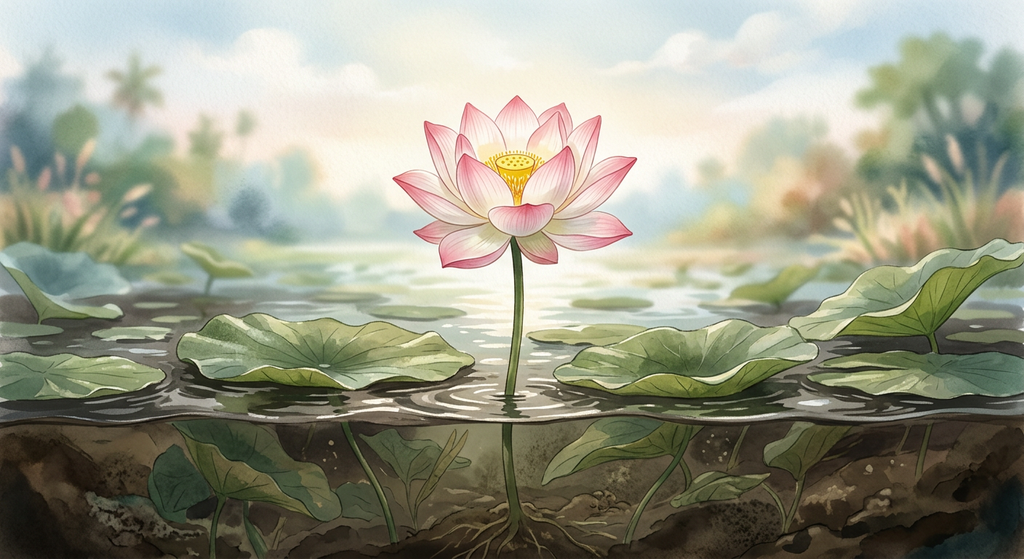
Imagine a lotus flower growing in murky water, yet remaining pure and untarnished. In the same way, our hearts can remain pure amidst the busyness of everyday life. It is not our environment that defines us, but how we engage with it.
This lesson is universal. Whether you have a busy family, a challenging job, or are simply seeking meaning in life, the true test of wisdom lies in how we live, not in how we retreat.
1. Life Is Your Temple
We often associate spiritual growth with special places or moments: a meditation room, a retreat, or a quiet morning. But the Vimalakīrti Sūtra challenges us: What if the real work begins when you step out the door?
Your home is a temple.
Your work is a temple.
Your relationships are a temple.
Your challenges are a temple.
It’s not about where you are, but how you are. Are you patient when your child cries? Do you stay calm when a colleague irritates you? Can you listen without judgment? That is the true practice.
2. Not the Form, but the Heart
It’s easy to fall into the trap of outward appearances. We might think:
"I meditate every day, so I am spiritual."
"I do volunteer work, so I am a good person."
"I read many books on wisdom, so I am enlightened."
But true growth is not in the actions themselves, but in the intention and transformation behind them.
Meditation without inner peace is just an exercise in sitting.
Good deeds with a hidden agenda are just transactions.
Knowledge without application is just information.
Ask yourself:
Have I become more patient?
Can I let go of what doesn’t serve me?
Do I respond with understanding instead of judgment?
3. The Pitfall of the spiritual ego
One of the most subtle obstacles on the path is the spiritual ego: the idea that you are "better" because you "know more" or have "practiced longer." You may let go of worldly fame, only to become attached to the pride of your own "enlightenment."
"I’ve been practicing for years, so I know better."
"I do so much for others, so I deserve respect."
"I am so spiritual, so you should listen to me."
But true wisdom is without "I". It is:
Serving without expectations.
Giving without keeping score.
Leading without controlling.
4. Growth Through Connection
We sometimes think that spiritual growth is a solitary journey. But the Vimalakīrti Sūtra teaches us that true growth happens in relationship with others.
Conflicts are opportunities to practice patience.
Critics are teachers in disguise.
Difficulties are invitations to become more creative.
It’s not about avoiding problems, but about learning to grow through them. A wise person is not someone without challenges, but someone who uses every challenge to become stronger and more compassionate.
5. The Art of Letting Go
One of the deepest lessons is that true freedom does not come from having more, but from holding on less.
Letting go of the need to be right.
Letting go of the fear of not being good enough.
Letting go of the urge to control everything.
If you find yourself getting angry when things don’t go your way, feeling superior to others, or wearing your achievements like a trophy, there is still work to be done.
6. Summary: Wisdom in Action
The essence of the Vimalakīrti Sūtra can be summed up in one sentence:
"True wisdom is not about leaving the world to find peace, but about cultivating peace within the world."
So what does this mean for you today?
In your family: Are you a source of warmth, even when you’re tired?
At work: Do you remain calm and clear, even under pressure?
In adversity: Can you maintain your inner peace?
In success: Can you let go of your ego and let others shine?
An Invitation to Reflect
Take a moment to reflect: Where in your life do you feel most tested? How could you approach that situation differently? What is one small step you can take today to bring more wisdom into your daily life?
The path to inner freedom does not begin somewhere far away. It begins here. Now. With the next breath.
Conclusion: The Lotus Within You
Remember: You don’t need to be a monk to be enlightened. You don’t need to be perfect to be wise. You only need to be willing to grow—wherever you are, whoever you are.
So the next time you feel overwhelmed by life, remember the lotus: it blooms most beautifully in the muddiest water.
Share Your Thoughts
Do you have a personal experience where you recognize these lessons? Share it in the comments—let’s learn from each other.
Confucius: nothing happens by Itself – My journey of discovery.
If you grow up in the West, without direct ties to Eastern cultures, you might know Confucius as a name—but not as a life philosophy. That was the case for me, until I came into contact with his wisdom through an unexpected path.
My wife is of Asian descent, but when we first met, around 1989, we were mainly focused on settling down: a job, a house, responsibilities. Religion or philosophy weren’t high on our agenda. That changed when health issues led me to a Taiwanese acupuncturist. One thing led to another, and we became friends with people who grew up with Buddhism, Taoism, and Confucianism.
What struck me most was the warmth and solidarity within that group. As a Westerner, I had to adjust to it at first—but soon, it felt familiar, and the friendships only grew stronger. It feels as if we are family.
Even when we travel to Taiwan, there are always people ready to welcome us with love. No pressure, no obligations, no expectations—just from the heart, out of compassion.
Over time, I began to explore the Three Teachings: Confucianism, Taoism, and Buddhism. You learn to see the extraordinary in the small things again. It brings peace and stability to the mind.
Who Was Confucius?
Confucius (551–479 BCE) was born in the state of Lu, in present-day China. Not a prince, but a boy from an impoverished noble family. His father died when he was just three years old, and he grew up in poverty. As a young man, he worked as a warehouse supervisor and a herdsman—with his feet in the clay, not in an ivory tower.
China at that time was a patchwork of warring states, where corruption and famine were rampant. Confucius saw the chaos and thought: ‘This can’t go on. Society is broken.’ He believed in a solution: ‘If leaders behave honorably and respect the old rituals, peace will come.’ For years, he traveled from state to state to advise rulers. But his ideals were too strict. Instead of peace, they wanted war and wealth. Confucius was ignored, sent away—sometimes even threatened.
Eventually, he returned home disappointed. But his greatest success came later: he became a teacher. Not for the elite, but for everyone—even for the poor, who could only pay their tuition with a bit of food. He taught them not just to read and write, but also how to be a good person.
His Core Lessons
His core message? ‘A person is like a rough stone—polishing turns it into a gem.’ His lessons:
Education: Lifelong learning.
Rituals (Li): Manners create harmony.
Humanity (Ren): ‘What you do not wish for yourself, do not do to others.’
Family: Respect begins at home.
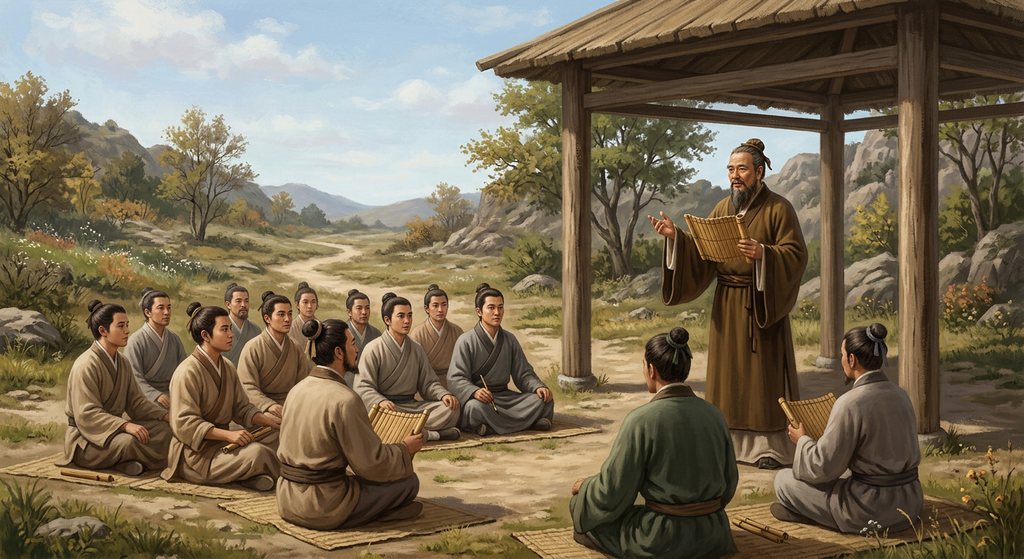
Confucius himself did not write any books. After his death, his students collected his teachings on bamboo slips—concise and powerful, as bamboo slips were the standard way to record texts at the time. This collection is known as the Lun Yu (The Analects).
Why Is Confucius Still Important Today?
Confucius died in 479 BCE, believing he had achieved little. But his philosophy became the foundation of Chinese culture. In countries like China, Japan, and Korea, you can still see how important education, family, and respect for elders are—thanks to this man.
Confucianism and Taoism: Contradictory or Complementary?
Taoism says: let go. Confucianism says: work hard. Contradictory?’ In the Tao, we see them as two sides of the same coin:
Confucius = the walls and roof (rules, hard work).
Taoism = the space inside (rest, letting go).
Without walls, there is no house. Without space, there is no life.
His Message for Today
His message is simple but powerful: The world does not improve on its own. Want a better world? Start by improving yourself, study diligently, and treat the people around you with respect.
Western Myth or Eastern Wisdom?
The famous quote "Our greatest glory is not in never falling, but in rising every time we fall" is widely attributed to Confucius. While the sentiment aligns perfectly with his philosophy of resilience, the statement likely originates from the 18th-century writer Oliver Goldsmith. He wrote this in his book The Citizen of the World as a fictional letter from a Chinese philosopher visiting London. Because the tone was so ‘Eastern’ and philosophical, the quote was mistakenly attributed to Confucius over the centuries. A beautiful example of how universal the message is!
Fun Facts About Confucius
Point
Explanation
First Teacher
Confucius made education accessible to everyone, not just the elite.
3,000 Students
He had approximately 3,000 students, 72 of whom were considered "master students."
Bamboo Slips
His teachings were written on bamboo slips, as this was the standard way to record texts at the time.
Conclusion
My journey to discovering Confucius was unexpected, but his lessons are universal. Whether you’re inspired by his wisdom or simply curious, his message remains relevant. Start with yourself—and the world improves with you.
What is your experience with Confucius or Eastern philosophy? Share your thoughts in the comments!
In a faraway land, in a beautiful temple, there lived a wise and kind teacher. One sunny day, someone brought a bag of green beans to the temple.
These beans had just been harvested and needed to dry in the sun.
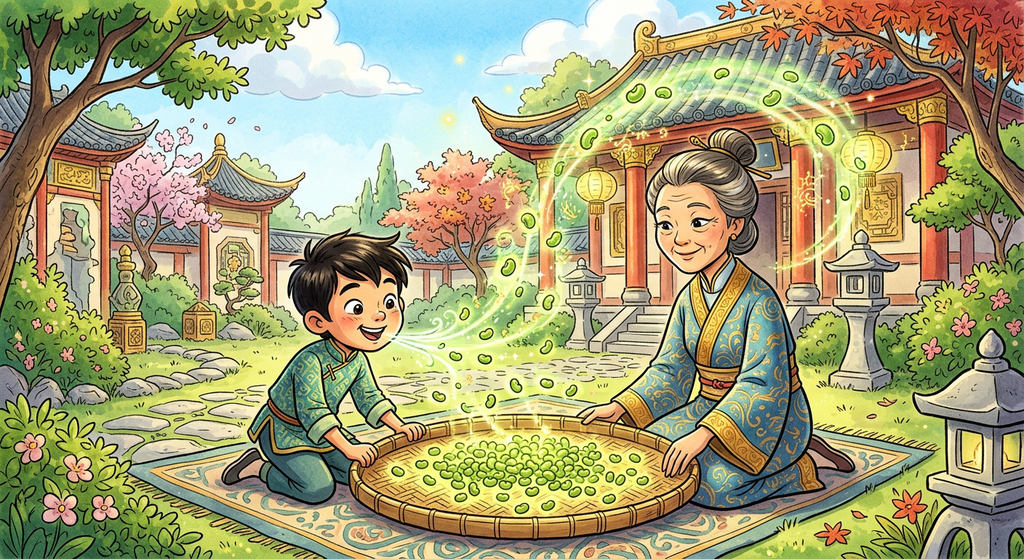
The teacher placed the beans in a large basket and set them in the garden. Suddenly, she saw a boy whom everyone called Little Silver. He gently blew on the beans, causing them to fly in all directions! Kleine Zilver werd genoemd. Hij blies voorzichtig over de bonen, waarna ze alle kanten op vlogen!
Little Silver, why are you blowing on those beans?" the teacher asked. "They will fall on the ground and get dirty!
The boy looked up and smiled. "I’m not Little Silver," he said. "I am now a living Buddha!"
The always calm teacher was startled. She saw that the boy looked different from usual. She knelt down and bowed deeply. "Venerable Buddha," she asked, "why are you blowing on these beans?"
The Buddha, speaking through the boy, said: "I am blowing magical power into these beans. Now they are magic beans! Whoever eats one will get better, no matter what illness they have."
The teacher was moved. She thanked the Buddha, and from that day on, the green beans were magical. Whenever someone was sick, the teacher would give them a magic bean, and the person would recover.
In the temple, there was also Grandma Wuwei, a kind old lady who came every day to clean and sweep. She had been doing this for many years, day in and day out. But one day, Grandma Wuwei did not show up.
The teacher sent someone to check on her. It turned out that Grandma Wuwei was sick. She had heard that the green beans were magical and had secretly eaten two beans, hoping she would get better. But instead, she got severe stomach pain and could not stand up.
The teacher immediately understood what had happened. "Grandma Wuwei was not honest," she thought. "If she was sick, she could have just told me. Then I would have given her beans. Now she is being punished because she secretly took them."
The teacher had Grandma Wuwei brought to the temple. She lit 108 large incense sticks and prayed for her. Grandma Wuwei bowed deeply and said she was very sorry.
After these sincere prayers, she felt better again.
The lesson of the story
If you need something, always ask for it in an honest way.
Taking things secretly will eventually lead to problems.
Always be honest and respectful!
Why 108 Incense Sticks?
In Buddhism, the number 108 is associated with the 108 worldly desires or illusions (Sanskrit: kleshas), which can distract a person from achieving enlightenment. These desires are categorized in a structured way:
6 Senses:
Buddhism recognizes 6 senses (unlike the typical 5 in Western thought). In addition to sight, hearing, smell, taste, and touch, there is also thought as a sense. This includes all mental impressions and ideas we form.
3 Time Periods:
Desires can manifest in the past, present, or future. This emphasizes that desires are not only present in the current moment but also arise from memories or expectations.
3 Feelings:
Every experience or desire can lead to pleasure, pain, or neutrality. These three feelings describe how we react to what we perceive.
2 Reactions:
For each feeling, we can be attracted or repelled. For example: if we experience something pleasant, we want to hold onto it (attraction), and if we experience pain, we want to avoid it (repulsion).
6 senses × 3 time periods × 3 feelings × 2 reactions = 108
By lighting 108 incense sticks, one symbolizes the release of all these desires and illusions, leading to purification and spiritual growth.
Mala (Prayer Beads):
A mala often has 108 beads, which are used to recite mantras. Each bead represents a step in the spiritual journey.
2. Taoist Meaning
108 Virtues: Virtues one must cultivate to live in harmony with the Tao.
108 Inner Demons: Demons that must be overcome to achieve true wisdom.
108 Movements: In traditional Taoist meditations or martial arts (such as Tai Chi).
Cosmic Harmony: The diameter of the sun is approximately 108 times that of the Earth, and the distance between the Earth and the sun is approximately 108 times the diameter of the sun.
4. Practical Application in Rituals
Purification: Driving away negative energy.
Gratitude: For the Buddha, the teacher, or the universe.
Gratitude: For the Buddha, the teacher, or the universe.